


Australian-made clothing costs more because it pays audited local wages, not the cheapest labour available anywhere on earth. That premium buys quality control, accountability when something goes wrong, and jobs in a domestic industry that contributes more than $27 billion to our economy and employs almost half a million people, even though most clothes worn here are still imported.
How big is Australian-made fashion, actually?
Bigger than most people assume, and shrinking on the factory floor even as the wider industry grows. Australia's fashion and textile sector contributes more than $27.2 billion to the economy and employs about 489,000 people, more than mining or utilities. Seventy-seven per cent of that workforce is women, and much of that scale sits in design, retail and distribution rather than on a factory floor, because physical manufacturing has been moving offshore for decades.
None of that stops Australians from being the heaviest clothes buyers on the planet. We buy an average of 56 new items a year, more than the US (53), the UK (33) or China (30). Most of what fills Australian wardrobes is imported. Locally made clothing is the exception, not the rule, which is exactly why the claim needs checking rather than assuming.
That gap between industry scale and wardrobe reality is worth sitting with. A sector employing hundreds of thousands of people can still lose ground every time a shopper defaults to the cheapest import without checking the label. The reverse is also true: every order placed with an accredited local maker keeps a wage, a superannuation payment and a safety inspection inside the country.
What does Ethical Clothing Australia check for?
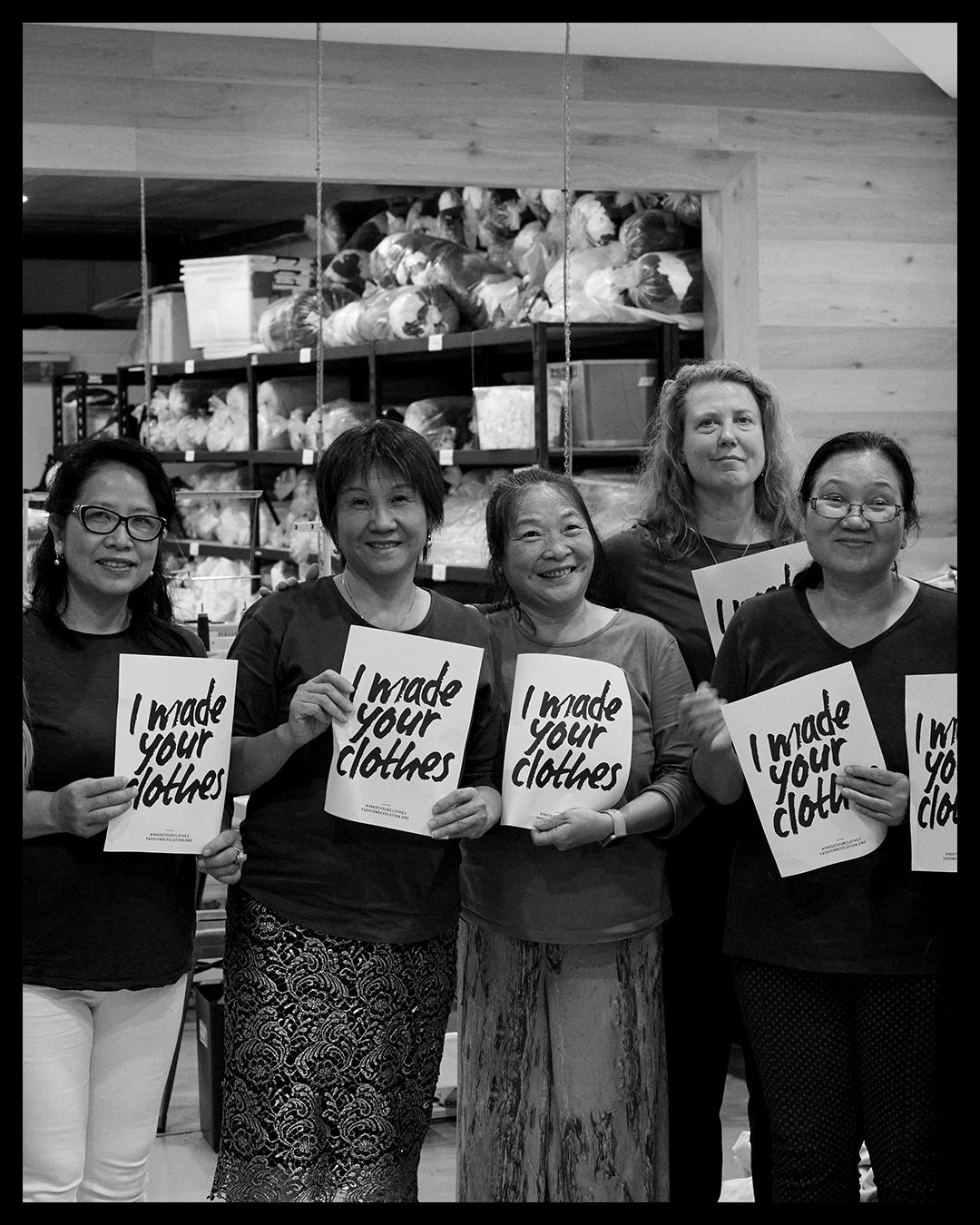
Ethical Clothing Australia (ECA) accreditation is a labour standard, not an environmental one, and it is worth being precise about the difference. The accreditation maps a business's entire local supply chain, from design and pattern-making through cutting, sewing, pressing and dispatch, including outworkers who sew from home, which is where exploitation in this industry has historically hidden. Auditors from the Textile, Clothing and Footwear Union check pay rates, superannuation, leave entitlements and workplace safety against Australian law, then repeat the audit every year rather than issuing a one-off tick.
What ECA accreditation does not check is fabric origin, dyeing methods or carbon output. Those sit under separate certifications like GOTS or RWS. A brand can be ECA accredited and still import its raw fabric, or run a heavier environmental footprint than a competitor with no accreditation at all. For the detail on how the audit itself works, see our explainer on Ethical Clothing Australia accreditation.
Does local manufacturing mean lower emissions?
Not automatically, and it is worth saying so plainly rather than letting the assumption stand. Lifecycle studies of a garment's carbon footprint consistently find that dyeing, finishing and fibre production carry the largest share of emissions, with transport a comparatively small line item by comparison. Shipping a finished tee from overseas adds emissions, but for most garments it is not the biggest lever in the stack, and claiming otherwise oversells what proximity delivers on its own.
The stronger case for local manufacture is accountability, not a shipping-emissions shortcut. When a garment is cut and sewn down the road rather than through several factories spread across two or three countries, a brand can trace exactly which dye lot, which machine and which worker touched it, and can fix a fault in days rather than months. That traceability is real and valuable. The case for it rests on control, not climate.
Why does Australian-made cost more, and is it worth it?
Wages explain most of the gap. A garment made under the Australian award system pays workers rates set and enforced under Australian law, checked annually by ECA. A garment made in a country where the legal minimum wage is a fraction of Australia's will always cost less to produce, because labour is priced differently there, not because Australian factories run less efficiently.
That premium buys three specific things. Quality control, because fewer hands and fewer freight legs mean fewer places for a fault to slip through unnoticed before it reaches a customer. Accountability, because a brand making its own product in its own factory has nowhere to point when something goes wrong, and has to fix it rather than quietly reorder from a different supplier. And jobs, in an industry that already supports hundreds of thousands of Australians while competing against countries where labour costs a fraction as much.
None of that is a reason to buy blind. A higher price should still buy a better result, not just a better story, which is why quality and fit matter as much as the label.
At Citizen Wolf, that shows up directly in the price tag. A Magic Fit tee costs AU$89, and the gap between that and an imported basic sits mostly in the cost of paying an audited local wage instead of the cheapest one available anywhere, and not cutting corners for sustainability. If a tee doesn't fit right first time, it gets remade rather than added to a landfill pile, which is part of what that price is funding too.

What should you check in an "Australian made" claim?
"Designed in Australia" and "Made in Australia" are different claims, and not every brand is careful about which one it uses on a swing tag. A few checks worth running before paying a premium for a local claim:
- Look for Ethical Clothing Australia accreditation specifically, not a general ethics statement. Accredited brands are listed on the ECA website and can produce a certificate on request.
- Ask where the garment is cut and sewn, not just where it was designed. A design studio in Sydney does not mean a sewing machine in Sydney.
- Treat material certifications such as GOTS, RWS or OEKO-TEX as separate from manufacturing claims. A garment can be made from Australian-grown wool and still be sewn overseas, or the reverse.
- Be wary of language like "proudly Australian" with no accreditation, factory location or supply chain detail behind it. Specifics can be checked. Vibes cannot.
If a brand cannot answer a direct question about which town its factory sits in, that is itself useful information.
Is Australian-made always more ethical?
Not automatically. Ethical Clothing Australia accreditation is a strong, third-party-audited signal, but not every Australian-made brand holds it, and holding it only covers labour conditions inside the local supply chain, not raw material sourcing further upstream such as where cotton is grown. Look for the accreditation itself rather than assuming location alone guarantees it.
Is it always more sustainable?
No. Sustainability depends on fibre choice, dyeing process, water use, chemical treatment and what happens to the garment at the end of its life, and each of those can be better or worse regardless of where a garment is sewn. Local manufacture removes one variable, long-haul shipping of the finished item, but does not automatically fix the rest.
Is "designed" and "made in Australia" the same?
"Designed in Australia" means the concept, pattern or branding originated here. It says nothing about where the fabric was cut and sewn, which is frequently offshore. "Made in Australia" refers to where the physical garment was manufactured. Only the second claim relates to local wages, local jobs and ECA accreditation, so check for that phrase specifically.
Citizen Wolf is Ethical Clothing Australia accredited and audited every year. Garments are cut and sewn to order in Marrickville, Sydney, once a customer's measurements come in, rather than stocked in advance and marked down later. We're also B Corp certified and offset more carbon than we produce through verified programs. None of that makes every choice we make perfect, but it is what an $89 tee pays for.
Posted: 1 July 2026